New sporting format and Jakarta circuit unveiled for inaugural FIA Rallycross World Cup
With less than four months to go until the inaugural FIA Rallycross World Cup, the FIA has unveiled both the official circuit layout and the sporting format that will define the landmark event when the world's best rallycross drivers arrive in Jakarta, Indonesia, on 5-6 December.
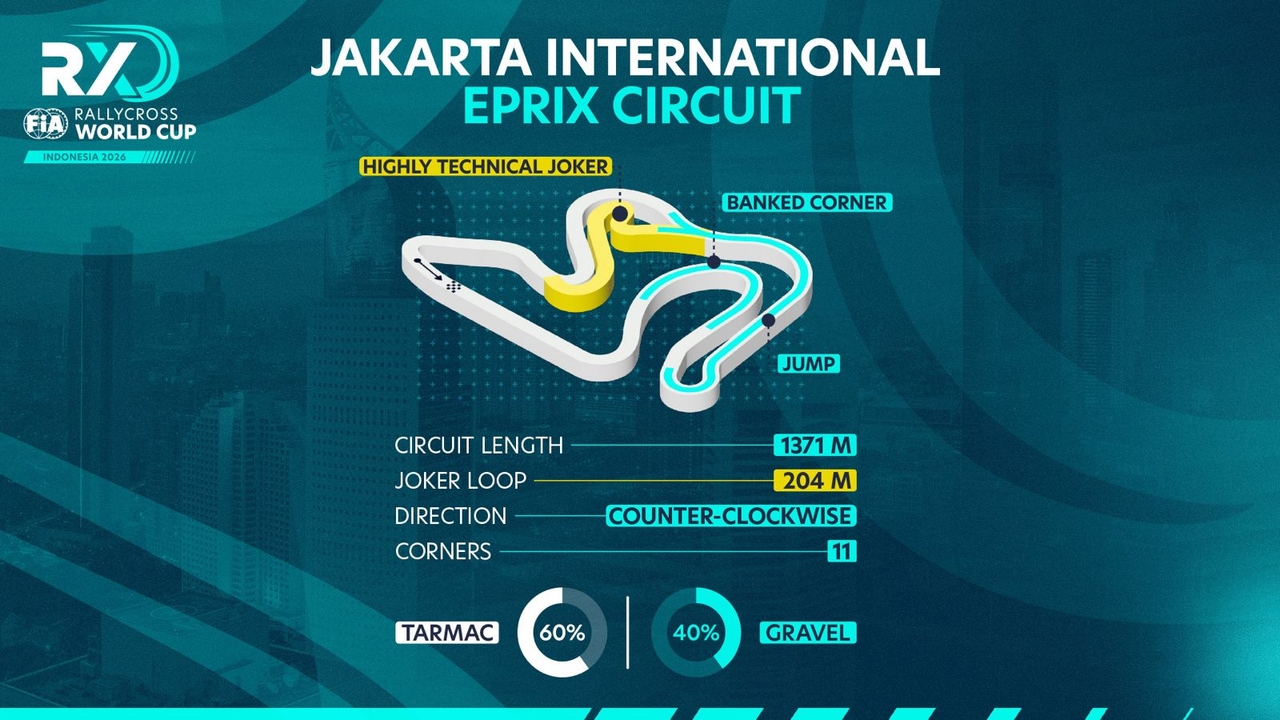
The new mixed-surface circuit has been created by transforming the Jakarta International E-Prix Circuit, adapting the venue's existing Formula E layout into a purpose-built rallycross track that combines 60% tarmac and 40% gravel. The transformation marks another milestone for the venue, with the circuit evolving from hosting world-class electric single-seater racing to welcoming the FIA Rallycross World Cup.
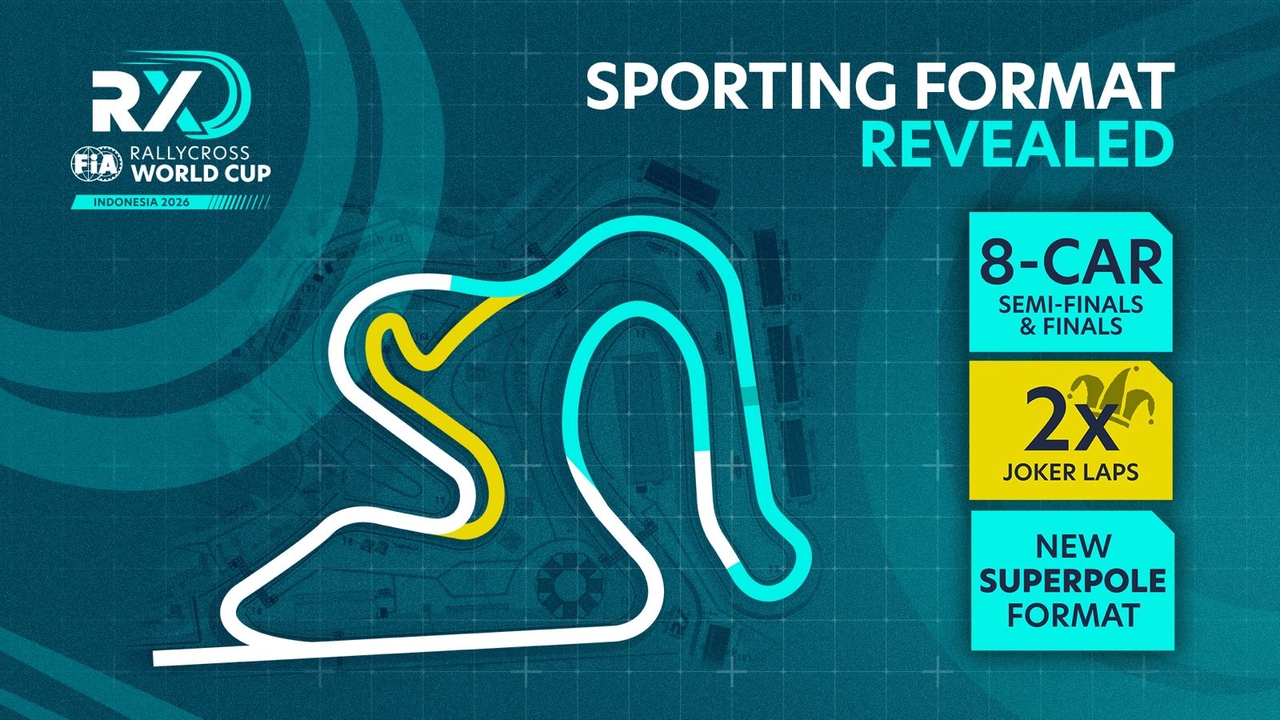
Among its standout features is a highly technical Joker Lap, designed to create genuine strategic variation throughout the weekend. The circuit also incorporates a spectacular jump on the back straight and a banked second corner, adding further overtaking opportunities and demanding a combination of bravery and technical precision from drivers.
Alongside the new venue, the FIA Rallycross World Cup will also introduce an exciting sporting format created to maximise competition from the opening laps of the weekend through to Sunday's Finals.
Superpole sets the stage
The action begins with a Superpole session, replacing the traditional qualifying draw to decide Q1 grid positions.
Following Free Practice, drivers will compete in individual time trials, with up to five cars on circuit at once but released in intervals. Each run consists of an out-lap, one timed flying lap and an in-lap, placing the emphasis firmly on outright speed and precision.
The fastest drivers from the opening Superpole session will then progress into a second Superpole phase, where lap times will determine the order in which competitors select both their qualifying race and grid position for Qualifying 1, adding a new strategic element before wheel-to-wheel racing even begins.
Double Joker strategy
One of the biggest changes for the World Cup is the introduction of two mandatory Joker Laps in every race.
Unlike the traditional single Joker Lap, drivers must now complete the alternative route twice, with the two Jokers not permitted on consecutive laps. The change is intended to create a wider range of strategic possibilities, forcing teams and drivers to carefully balance pace with race management throughout every contest.
The Jakarta circuit's technical Joker section has been specifically designed to make those decisions even more significant.
Bigger battles in the Finals
The World Cup will also feature expanded eight-car Semi-Finals and Finals, bringing more drivers into the fight for victory compared to traditional rallycross events.
The top four finishers from each Quarter-Final will progress to the Semi-Finals, before the leading four drivers from each Semi-Final advance to an eight-car Final, with all deciding races contested over six laps.
The larger grids are expected to produce even more intense racing, creating greater opportunities for overtaking and strategic decision-making as drivers battle for the first FIA Rallycross World Cup titles.
A new chapter for rallycross
The FIA Rallycross World Cup will be contested over a single event, with drivers competing for the FIA Rallycross RX1 World Cup and FIA Rallycross RX5 World Cup titles. The event represents the next step in the discipline's evolution, extending the reach of the FIA European Rallycross Championship onto the international stage. While RX1 and the new-for-2026 RX5 category have formed part of the FIA European Championship throughout the season, Jakarta will provide both classes with their first opportunity to compete for FIA Rallycross World Cup honours in front of a global audience.
Together with an all-new venue, an innovative sporting format and rallycross' signature wheel-to-wheel racing, the event underlines the FIA's long-term ambition to expand the discipline beyond its traditional heartland, creating new opportunities for drivers, teams and fans while showcasing the sport to new audiences around the world.